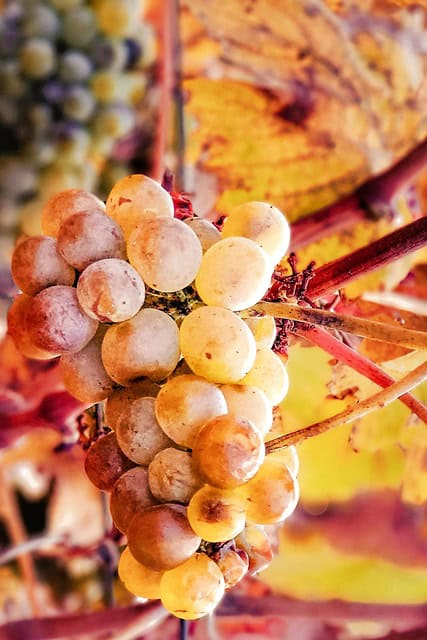
La Crescent is a white wine grape released by the University of Minnesota in 2002 that produces wines of striking aromatic complexity — peach, apricot, citrus, honey — with enough acidity to keep them precise rather than soft. It’s the white grape that Minnesota winemakers get most excited about, and the one most visitors overlook while fixating on the reds.
La Crescent survives temperatures as low as -30°F without significant vine damage. At that level of cold hardiness, the aromatic intensity it delivers is genuinely unusual.
Where La Crescent Comes From
The University of Minnesota’s Horticultural Research Center selected La Crescent from a cross of St. Pepin and MN 1166, a University breeding selection. St. Pepin itself is a cold-hardy hybrid with Vitis riparia in its parentage — the same wild northern grape that gives Marquette and Frontenac their cold hardiness. La Crescent inherited both the cold tolerance and, unexpectedly, an aromatic complexity that rivals varieties bred specifically for fragrance.
The University released La Crescent in 2002, four years before Marquette. It hasn’t spread as widely as Marquette — its aromatic style isn’t universally appealing, and it requires careful handling in the winery — but growers who commit to it produce some of the most distinctive white wines made anywhere in the Midwest.
What La Crescent Tastes Like
Dry and off-dry styles
Dry La Crescent leads with stone fruit — peach and apricot — backed by citrus zest and a clean, crisp finish. The acidity is high, which keeps the wine precise and food-friendly even when the fruit character is lush. Off-dry versions develop honey and tropical fruit notes; the natural acidity prevents them from tasting sweet in a cloying way.
The aromatic profile draws comparisons to Gewurztraminer and Riesling, but La Crescent has its own character — a particular combination of stone fruit and citrus that doesn’t map cleanly onto either European variety. Tasted blind, it reads as high-quality and distinctive, which is the point.
Late-harvest and dessert styles
La Crescent’s natural sugar potential makes it well-suited to late-harvest production. In exceptional years, Minnesota winemakers produce late-harvest versions with concentrated apricot and honey notes and the structural acidity to age. These wines are rare — the harvest timing is weather-dependent — but when they appear in tasting rooms, they’re worth buying.
The Varietal Challenge
La Crescent’s aromatic intensity requires careful winery handling. The grape picks up oxidation easily, and fermentation temperature management matters more than with less aromatic varieties. Winemakers who treat it carelessly produce wines that lose their signature fragrance — the precise quality that makes the grape interesting in the first place.
The other challenge is market recognition. Most wine buyers outside Minnesota have never encountered La Crescent. Tasting rooms that produce strong varietal bottlings often find that visitors need a brief introduction before they engage with it. The winemakers who’ve built their reputations around it tend to treat that education as part of the tasting room experience.
Where to Find La Crescent
Cannon River Valley, Minnesota
Saint Croix Vineyards in Stillwater grows La Crescent on 38 acres alongside Marquette and Frontenac Gris — their varietal bottling ships to 22 states and provides the easiest access to a consistent, well-made version. Morgan Creek Vineyards in New Ulm produces estate La Crescent on 26 planted acres along the Minnesota River valley hillside. Falconer Vineyards in Red Wing on the bluffs above Lake Pepin produces a particularly polished version that rewards careful attention at the tasting room.
Finding specific bottles
Ask specifically for varietal La Crescent at tasting rooms rather than accepting whatever white wine is poured first. Some wineries blend it into white blends, which obscures its character. The varietal bottlings are the ones worth seeking out. Search for La Crescent wines on Amazon to find producers who ship nationally.
Plan Your Visit
La Crescent harvest runs slightly earlier than the red grapes — typically late August through mid-September in the Cannon River Valley. The best time to taste current-vintage La Crescent is fall, when newly released bottles are in tasting rooms alongside the last of the previous vintage. For the full regional guide — including maps, seasonal hours, and the best stops in Minnesota wine country — see the Minnesota Wine Country Guide and the Cannon River Valley region page.