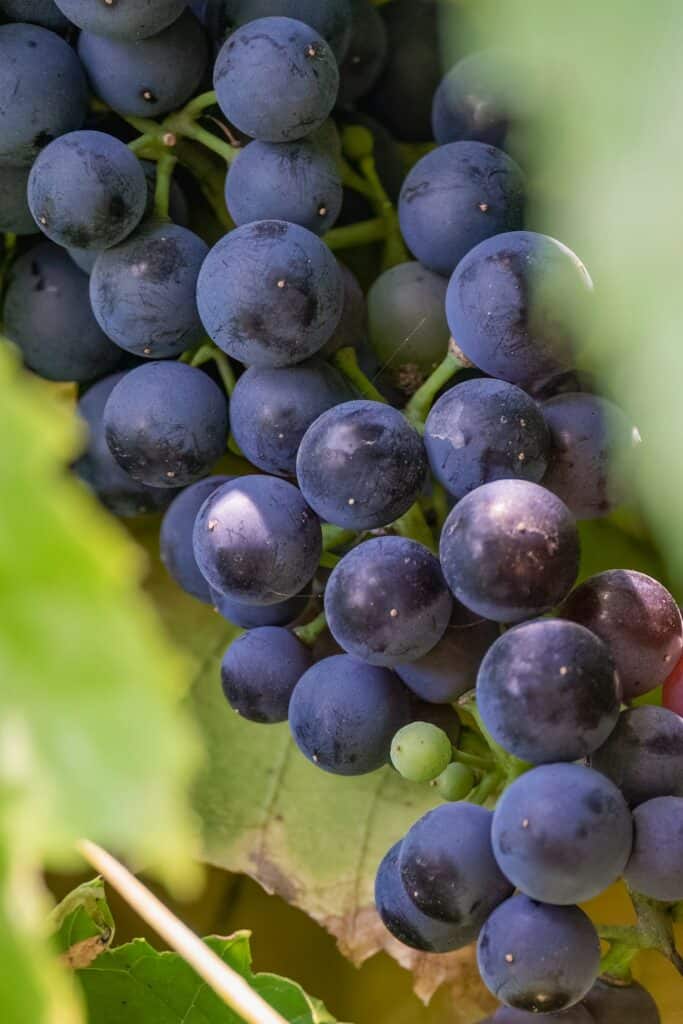
Frontenac is a red wine grape released by the University of Minnesota in 1996 — the first cold-hardy red to demonstrate that the upper Midwest could produce serious table wine. Before Marquette, before Petite Pearl, Frontenac was the proof of concept. It survives -30°F without significant vine damage. It produces deeply colored, high-acid wines with dark fruit and earthy character that reward winemakers who understand how to work with it.
Three decades after its release, Frontenac remains one of the most widely planted grapes in Minnesota, Wisconsin, and other cold-climate states. It earned that position.
Breeding and Parentage
The University of Minnesota’s Horticultural Research Center bred Frontenac from a cross of Landot Noir — a French hybrid — and a selection from Vitis riparia, a wild grape native to northern North America. That riparia parentage is the source of its cold hardiness; riparia vines in the wild survive Minnesota winters without protection. The Landot Noir side contributed color, tannin structure, and the earthy complexity that distinguishes Frontenac from the later University releases.
The University released Frontenac alongside Frontenac Gris (a color mutation producing white wine) in 1996. A second color mutation, Frontenac Blanc, appeared later at a Minnesota vineyard and has been selected for white wine production as well. The three together form a complete family from a single original cross.
What Frontenac Tastes Like
Red table wine
Frontenac produces deeply colored wines — near-opaque purple in youth — with aromas of black cherry, plum, and cranberry. Earthy, almost Rhône-like undertones appear in well-made examples. The tannins are present but firm rather than grippy, and the acidity is high — naturally high, which is both a strength and a challenge depending on how the winemaker handles it.
The best dry Frontenac table wines balance that acidity against enough fruit concentration to avoid tasting thin. The style landed by the best Cannon River Valley producers is something like a Côtes du Rhône with more red fruit and a more pronounced earthy note.
Rosé
Rosé is arguably Frontenac’s best expression. The grape’s cherry character and natural acidity make a pink wine with real precision — dry, crisp, with a strawberry-cranberry profile that’s immediately appealing and works with a wide range of food. Several Minnesota winemakers have built their reputation on Frontenac rosé specifically.
Port-style dessert wine
Frontenac’s naturally high sugar potential and structure make it well-suited to fortified port-style production. Many Minnesota tasting rooms offer both a dry table wine and a port alongside each other — the contrast is genuinely illuminating about what the grape can do across styles.
The Acidity Challenge
High acidity is Frontenac’s most discussed quality control issue. The grape’s natural TA (titratable acidity) runs higher than most European reds, which can produce wines that taste tart or thin if the winemaker doesn’t account for it. Common approaches include extended maceration to pull more body from the skins, malolactic fermentation to soften acidity, and blending with lower-acid varieties. The wineries that have been growing Frontenac longest have generally found their approach through trial and error over multiple vintages.
For consumers, the practical implication is that Frontenac quality varies significantly between producers. A well-made Frontenac from an experienced Cannon River Valley winery is a completely different experience from a rushed version that hasn’t addressed the acidity.
Where to Find Great Frontenac
Cannon River Valley, Minnesota
The Cannon River Valley southeast of the Twin Cities is Frontenac’s home ground. Nearly every winery in the appellation grows it. Alexis Bailly Vineyard in Hastings has been working with Frontenac since before its official release — their experience with the variety is unmatched in the state. Cannon River Winery in Cannon Falls produces a Frontenac rosé that consistently places in regional competitions. Falconer Vineyards in Red Wing, on the bluffs above Lake Pepin, produces both a dry table wine and a port-style dessert wine from the grape.
Wisconsin
Wollersheim Winery near Prairie du Sac grows Frontenac as part of an estate program that now produces 65,000 cases annually. Botham Vineyards near Barton produces estate Frontenac in the Kettle Moraine. Both represent what the grape does in Wisconsin’s climate — similar cold tolerance, slightly different soil character than the Minnesota river valleys.
Ordering online
Several Minnesota and Wisconsin producers ship nationally. Search for Frontenac wines on Amazon to find available bottles from cold-climate producers.
Plan Your Visit
Frontenac harvest runs September through early October in most Minnesota and Wisconsin growing regions — the best time to visit if you want to taste recently pressed wine and see the grape in context. For the full regional guide, see the Minnesota Wine Country Guide and the Cannon River Valley region page.